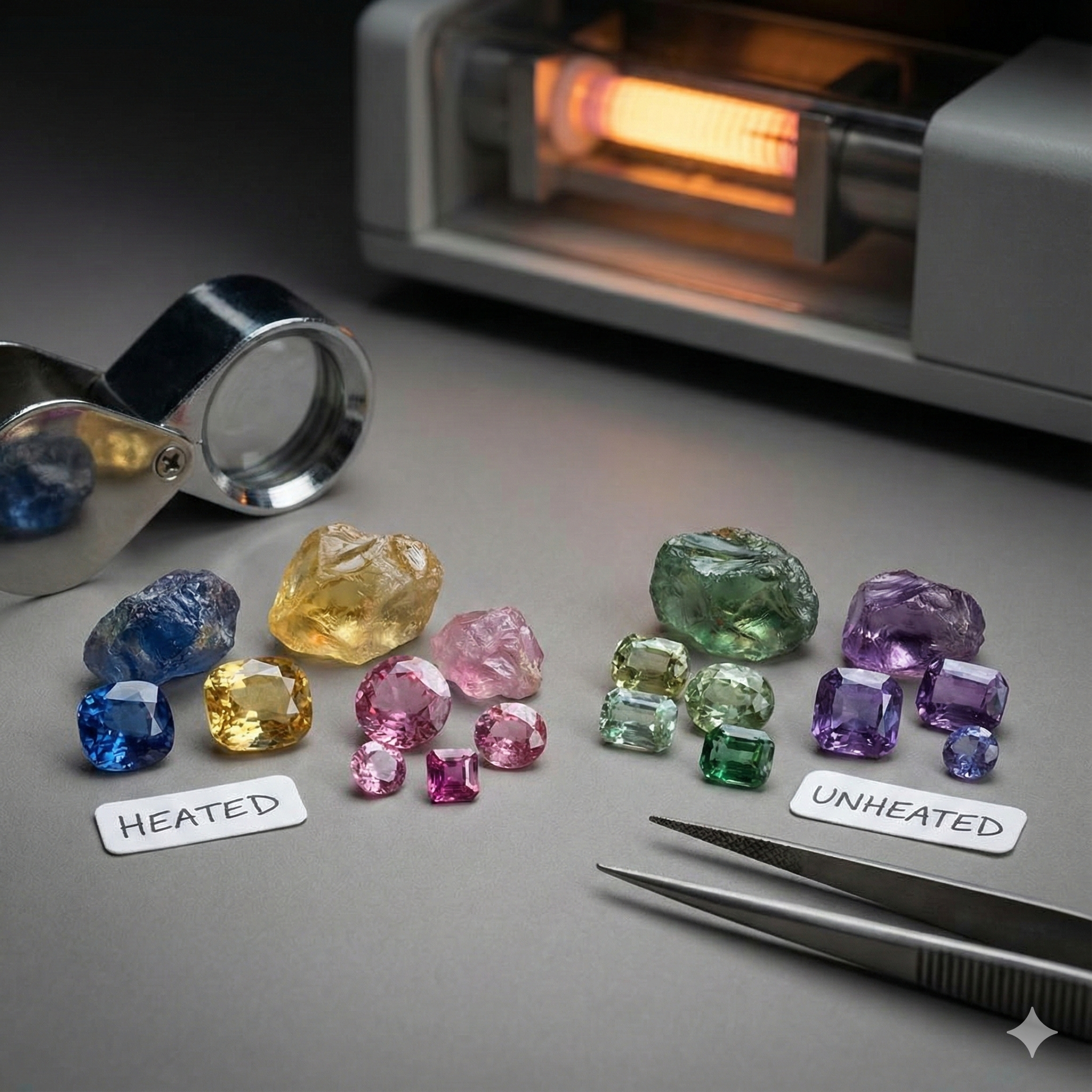
I remember a client, Sarah, who came to me with a sapphire ring inherited from her grandmother. It was a beautiful, deep blue, and she was convinced it was incredibly valuable. As I examined it under magnification, I noticed a subtle uniformity to the color, a certain luminescence that, while lovely, hinted at something beyond nature's direct hand. This is a common scenario; the allure of a perfect sapphire often leads to questions about its origin and treatment, and understanding these nuances is key to a truly accurate appraisal.
Sapphires, often synonymous with a regal, deep blue, actually boast a dazzling spectrum of colors, far beyond that single hue. Think of the vibrant “cornflower blue” of Kashmir sapphires, the fiery orange-red of padparadscha sapphires, or the enchanting “fancy” sapphires in shades of pink, yellow, green, and even violet. Each color possesses its own unique appeal and market value, influenced by factors like intensity, saturation, and purity. What many people don't realize is that these breathtaking colors, especially the most sought-after blues, are very frequently enhanced through heat treatment. This isn't to say it diminishes their beauty or value, but transparency is paramount. Heat treatment, performed under controlled conditions, can improve a sapphire's color and clarity by redistributing or dissolving minute inclusions and altering mineral structures. It's a widely accepted and ethical practice in the gem trade, but it absolutely must be disclosed.
When evaluating a sapphire, I employ a multi-faceted approach. Firstly, color assessment is crucial. We look beyond just the hue to the saturation (how intense the color is) and the tone (how light or dark it is). A vivid, medium-dark blue sapphire with excellent saturation will command a higher price than a pale or overly dark stone, regardless of treatment. For instance, a sapphire with a vibrant, evenly distributed blue is generally more desirable than one with patchy color zones.
Secondly, clarity examination is essential. While flawless sapphires are exceedingly rare, the type and visibility of inclusions play a significant role. I look for “silk” – tiny needle-like inclusions that can actually enhance a sapphire’s beauty by diffusing light, or “windows” – areas of poor transparency that detract from the gem's brilliance. Understanding how inclusions interact with the light and color is vital.
Thirdly, and this is where the truth behind treatments comes in, identifying the presence and extent of heat treatment is non-negotiable. This is where specialized gemological equipment and expertise are indispensable. We utilize tools like a microscope with high magnification, refractometers, and sometimes even spectroscopy to detect the tell-tale signs of thermal enhancement.
Consider the principle of information asymmetry. In many markets, one party (like a seller) possesses more information than another (like a buyer). In gemology, this can lead to misunderstandings about a stone's true nature and therefore its value. My role as an appraiser is to bridge this gap, ensuring the client has all the relevant information.
In practice, I once appraised a sapphire pendant that the owner believed to be untreated due to its exceptional clarity and color. However, under magnification, I observed specific healed fractures and a subtle uniformity in the color zoning that are characteristic of heat treatment. While the stone was still a beautiful and valuable gem, disclosing the treatment meant the appraisal reflected its market reality accurately, preventing potential disappointment if it were ever to be sold based on a misunderstanding.
Ultimately, whether a sapphire is natural or treated, its beauty and value are multifaceted. My aim is always to provide a comprehensive and transparent appraisal that reflects both the inherent qualities of the gemstone and its current market standing. If you're looking to understand the true worth and story behind your sapphire treasures, don't hesitate to seek a professional appraisal. It's the most reliable way to unveil the full spectrum of your gem's potential.